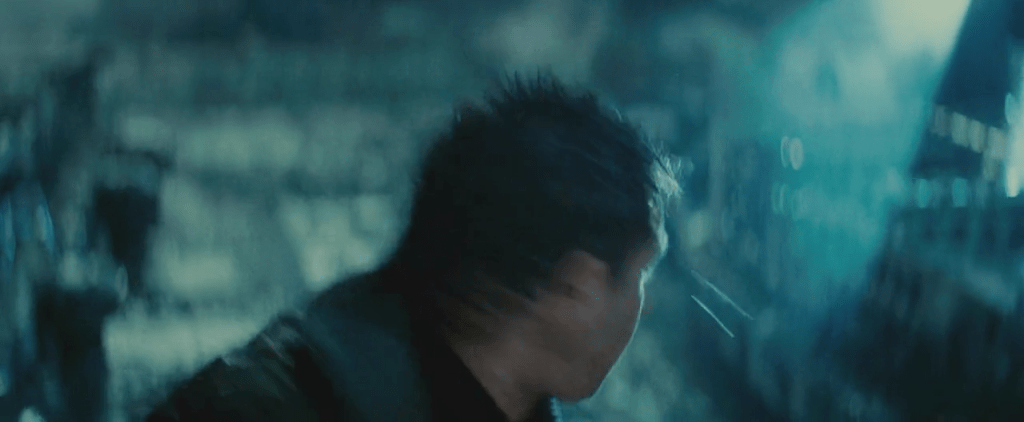
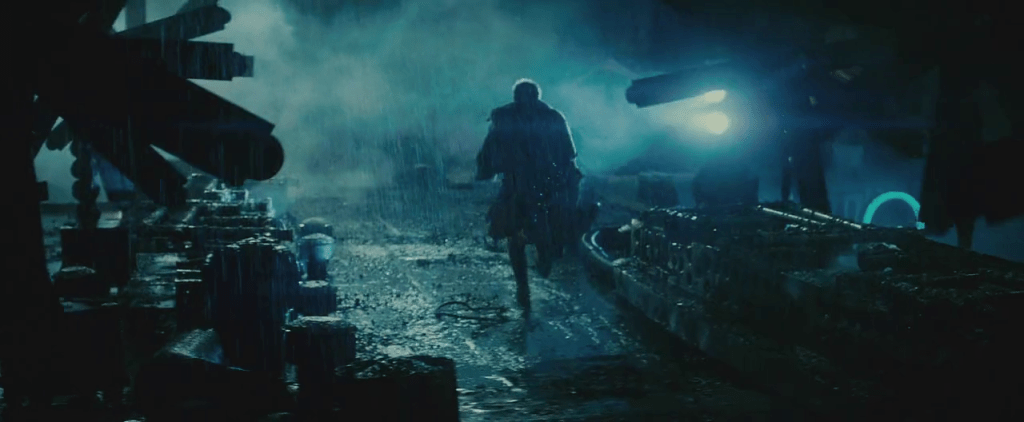
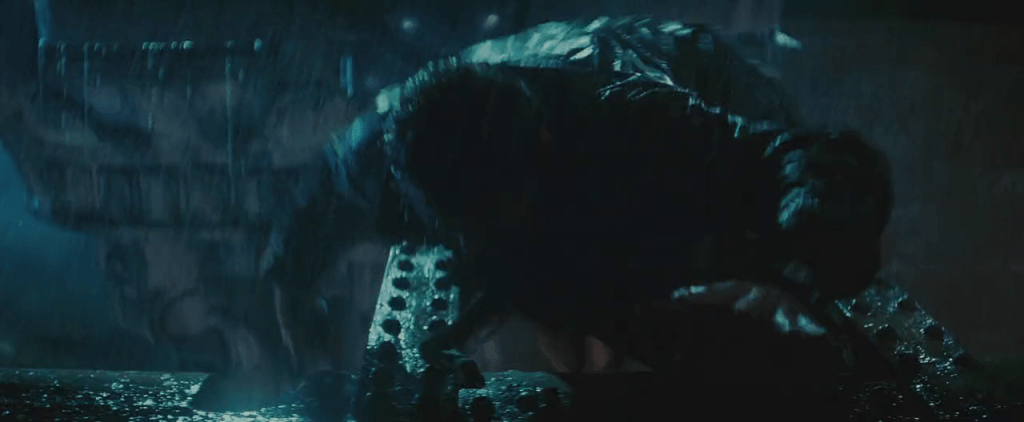
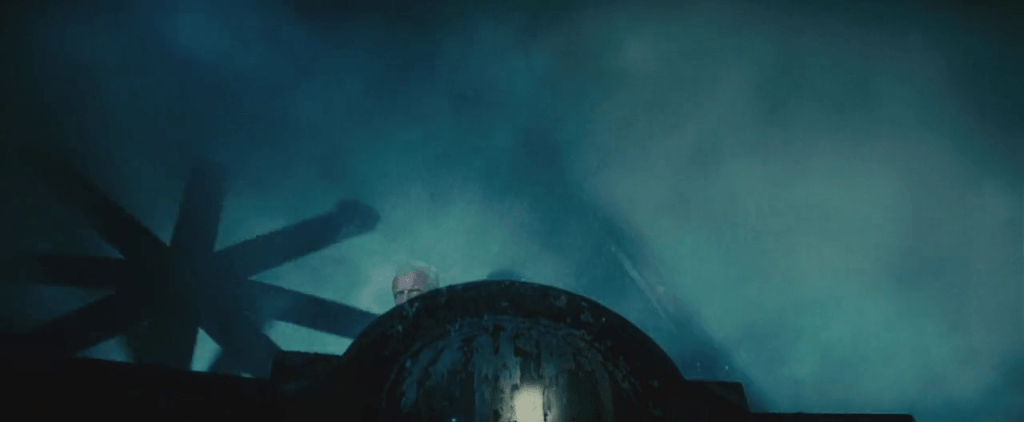
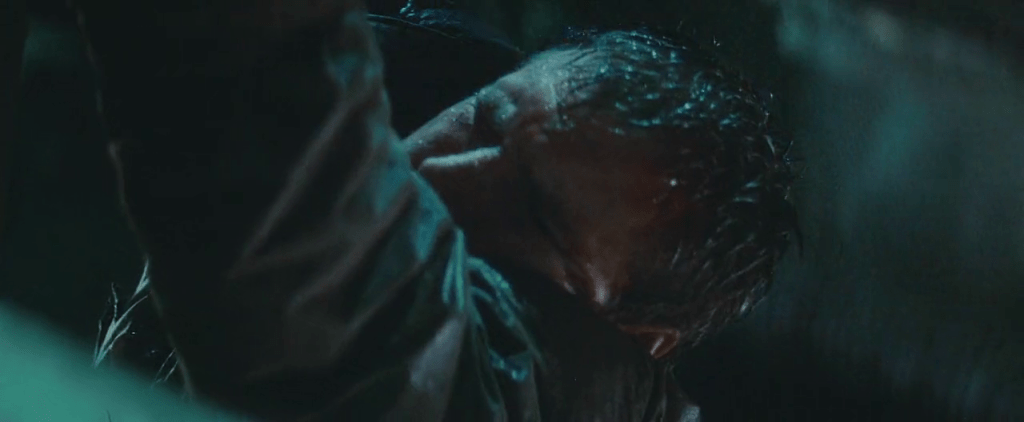
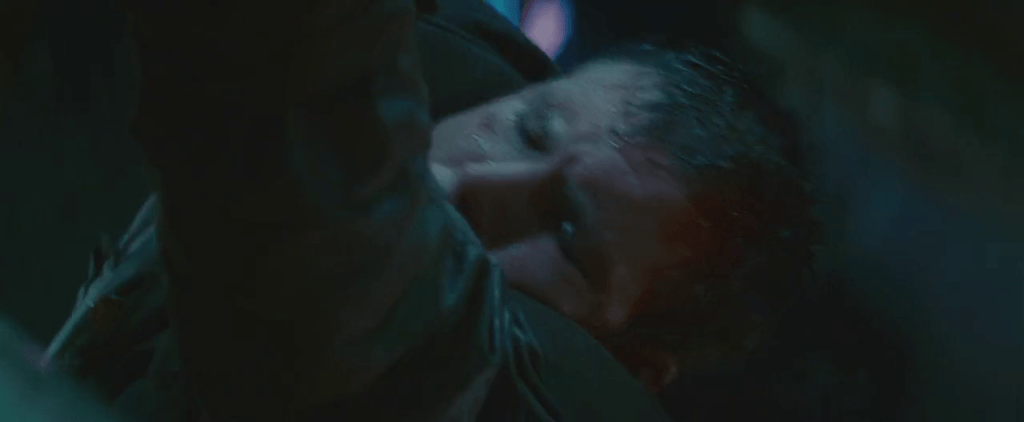
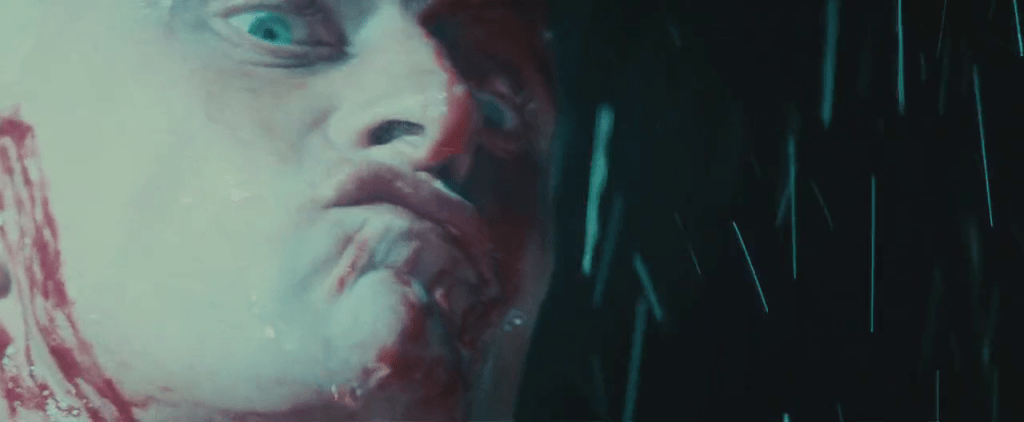
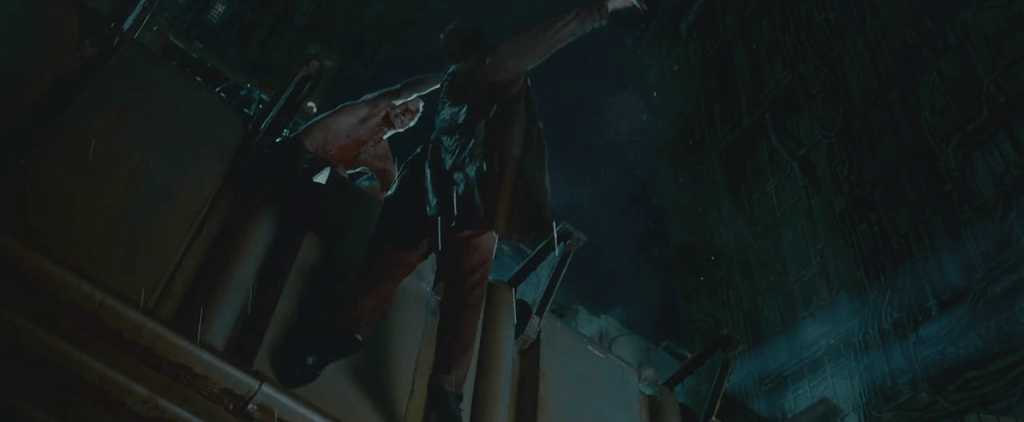
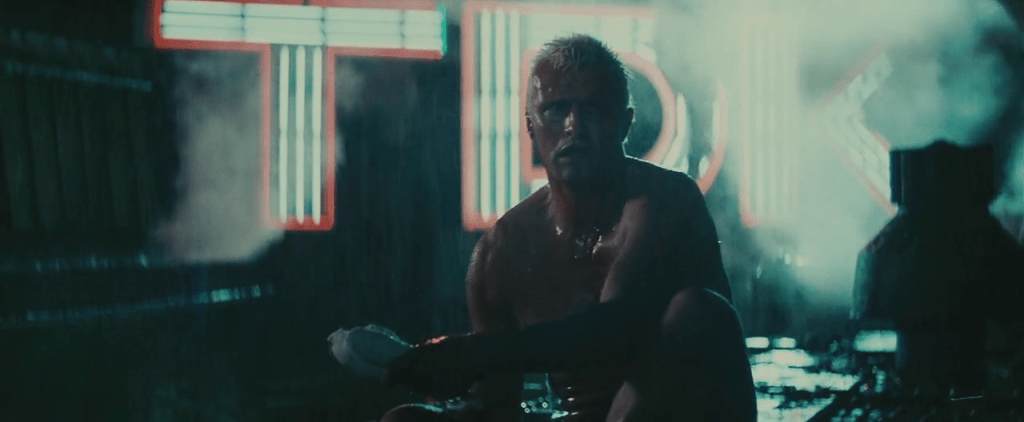
What does Roy Batty from Blade Runner Want?

“I want more life,” Roy tells Elden Tyrell. Well, that was a fast game of what they want! Roy wants to live longer than four years.

But survival, or ‘more life’, is not on Reiss’ 16 desire list. Neither is shelter, money, or spirituality. These things make up a considerable part of our lives! But in Reiss’ research, these are not desires themselves. Instead, our desires are WHY we want survival, shelter, money, or spirituality. The 16 desires motivate us at an even deeper level. The great thing about using the Reiss model is we can discover why Roy wants more life.

Let’s see how they introduce Roy to the audience.

“What is this?” Deckard asks as Vangelis’s synthesizers swell ominously.
Nexus 6. Roy Batty.” Police Captain Bryant says. “Incept date 2016. Combat model. Optimum self-sufficiency. Probably the leader.

This description is fascinating because we get the parameters of Roy’s creation. If we followed these details, we should easily be able to see what motivates Roy. Here are the features Roy’s creators wanted:

  • Independence (Freedom, Self Reliance, Determination)
  • Vengeance (Compete, Retaliate, Defeat, come from behind)
  • Power (Domination, Control, Authority)

But something seems off. That isn’t Roy Batty.

He isn’t fiercely independent; he is usually with someone else. Roy does not seem motivated by vengeance, either. He has plenty of chances to get revenge on Deckard, but only breaks two of his fingers for the female replicants Deckard retired. And if power were a motivation, Roy should be able to dominate the weaker-minded Zhora, Pris, and Leon, but he refuses to. He does not lead the replicants through his superior mental prowess. Come to think of it, Roy should be able to dominate EVERYONE in Blade Runner. He’s as smart as his genius creator. Maybe smarter. None of those desires seem right for Roy!

Let’s try again, but this time, let’s look at what Roy says.

“You better get it up, or I’m gonna have to kill ya! Unless you’re alive, you can’t play, and if you don’t play…”

Roy tells us here the reason for living is play. Does Social Interaction work as Roy’s primary desire? I think it does. He wants to play with his friends. He cries and struggles to find the right words when he tells Pris, “Ahh… There’s only two of us now.”

He even manipulates J.F. Sebastian by becoming his friend. Roy could easily torture Sebastian but decides not to. Pris helps, saying, “We need you, Sebastian. You’re our best and only friend.” as well. Roy then makes Sebastian laugh by playing with some eyeballs lying around the apartment. “We’re so happy you found us!”

We’re so happy you found us! Roy loves to play; if only his world weren’t so dreary!

Roy does not just want more life for himself. He wants it for his friends as well. “If we don’t find help soon, Pris hasn’t got long to live. We can’t allow that,” Roy tells Sebastian. Roy then walks over to a chessboard and asks, “Is he good?”

Sebastian asks, “Who?”

“Your opponent” Roy clarifies. Roy will even use games and play to reach his creator.

JF even introduces Roy to Tyrell saying, “Mr. Tyrell. I— I brought a friend.”

Roy howls in despair after losing Pris. With no friends left, Roy spends the last few moments of his life playing a game with Deckard. He sings, he recites nursery rhymes; he gives Deckard back his gun and lets him take a free shot, but when Deckard falls off the side of the building, the game is over. Deckard may not be a genuine friend, but he is the only social interaction Roy has left at the end of his life.

This leads us to Roy’s next major motivator: Romance. He says, “Chew, if only you could see what I’ve seen with your eyes!” and he tells Deckard, “I’ve seen things you people wouldn’t believe!”

Roy describes some of the beautiful things he has seen in his brief life, “Attack ships on fire off the shoulder of Orion… I watched C-beams glitter in the dark near the Tannhäuser Gate.” Roy is so enthralled by the beauty of it all he makes poetry. Even as his body is shutting down, Roy describes his situation with a poetic simile, “All those moments will be lost in time, like tears in rain... Time to die.

I think Roy’s third desire is idealism.

He recognized the injustice his creators had inflicted on him and his friends with a four-year life span and wanted to fix it. How could life be so beautiful and so short, while the replicants live in fear as slaves? Roy thought he could change the situation for his replicant friends, even if it was incredibly difficult. They at least had to try, even if it meant sacrificing the last moments they had. Roy is shocked to find out there is no way he can get more life.

“You were made as well as we could make you,” Tyrell tells Roy.
“But not to last,” Roy laments.

Roy doubts his actions. “I’ve done questionable things,” he says. Now that he knows nothing can save him or Pris from their expiration dates, was it all worth it? Roy isn’t sure. But because his creators cannot fix the problem, Roy kills them for what they have done. I don’t think Roy kills Tyrell and Sebastian for personal revenge but to right the injustice they inflicted on the replicants by creating them to be more human than human, but with such a short shelf life. He even apologizes to Sebastian, his friend, before killing him. It does not seem personal with Roy, but ideological.

Roy thinks constantly about ethics, questioning his own motivations and others. “Not very sporting to fire on an unarmed opponent,” Roy says after dodging Deckard’s first bullet. “I thought you were supposed to be good. Aren’t you the good man? Come on Deckard. Show me what you’re made of.” If play and justice motivate Roy, you better play fair. At least as fair as you can against a superhuman.

Roy breaks two of Deckard’s fingers for killing Zhora and Pris. Punishment must be inflicted, but the replicant women only had a short time left. Deckard did not create them and was not responsible for their brief lives. With Deckard’s punishment already exacted, Roy had no reason to punish him further. So instead, he plays a game. Roy sets the parameters of their play and gives Deckard his gun back. “Come on, Deckard, I’m right here, but you’ve got to shoot straight.” Deckard takes a shot with his off-hand, and Roy dodges Deckard’s bullet again at point blank range, a blood trail oozing where the bullet grazed his temple.

“Straight doesn’t seem to be good enough! Now it’s my turn. I’m gonna give you a few seconds before I come. One, Two. Three, Four.” It’s the only way this game will be any fun. Roy plays with a handicap, it’s only fair. It is the sporting thing to do. Deckard is no match for Roy, but no one is. Roy mourns Pris’ death, kisses her while Deckard runs, and howls in agony now that he is alone, but then Roy finishes his count, and the game with Deckard continues. Roy is happy to play as long as he can. He even puts a nail through his palm to play a little longer.

And when Deckard spits in Roy’s face as he falls, Roy shouts, “Kinship!” and catches him. Even if only for a few moments, Roy found a playmate he could save. And Roy didn’t want to die alone.

So here are my guesses for Roy Batty’s primary desires:

  • Social Contact (Friendship, Companions, Group play)
  • Romance (Beauty, Art, Attraction)
  • Idealism (Belief, sacrifice, Justice, and making things right)

This feels more like Roy to me. A playful and friendly romantic who will sacrifice trying to repair what is wrong. One of the most difficult things in trying to understand our desires is how much internal conflict there is between them. The desires feed off one another, giving dimension and depth to our motivations.

There is also a conflict between what we have and what we want because often they do not match up. Roy may be powerful, but he does not want power. By design, he may not need help; but he wants friends. And while he could get revenge, he’d rather repair injustice to help his friends. And what a pity it is that for all the amazing things he has seen, those moments will all disappear without being shared. Roy loses all his friends and dies on top of a dingy, abandoned, apartment complex, unable to fix the replicant’s condition, with only his would-be killer to talk to. But at least Roy does not die alone.

See you, Space Cowboy.

And as a side note, you may notice how similar Roy Batty’s list of desires is to Luke Skywalker’s, but instead of Honor Roy has Romance. Luke is slightly more idealistic than Roy, but their desires seem fairly close. The 16 desires are not good or evil. Would Roy have been the hero in a different story? Maybe he already was.
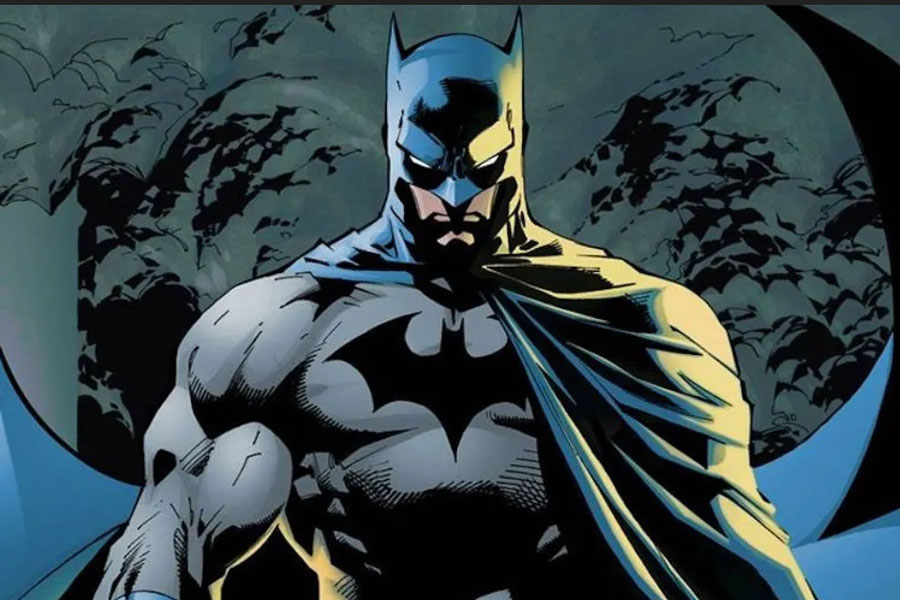
What does Batman want?

“I am vengeance. I am the night. I am Batman!”

Another round of what do they want? using Steven Reiss’ 16 desires, featuring the Dark Knight himself.

Batman is very clear about his primary desire. He is Vengeance. His parents’ death pushed him into a lifetime of fighting criminals. Or at least it aimed him in that direction. Bruce may have always wanted revenge. Tragedy was the catalyst that unleashed him on the world.
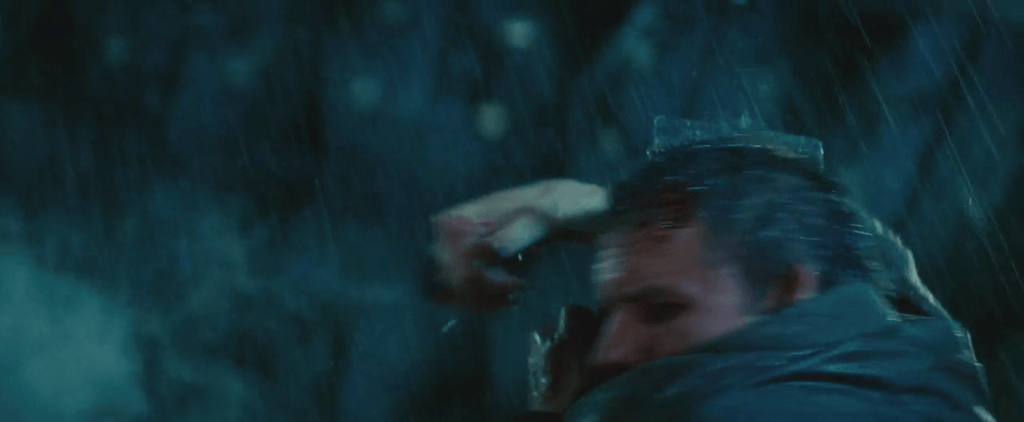
Idealism is next. Batman is looking for justice and sacrifices his nightlife as a billionaire to fix things.

  • Vengeance (Compete, Retaliate, Defeat, come from behind)
  • Idealism (Belief, sacrifice, Justice, and making things right)

(spoiler alert: I’m wrong about batman being motivated by idealism. I think showing my process of correcting this mistake might be fun!)

But does Batman have a third motivation? He has all the social status he could want as a billionaire, but he doesn’t like it. He has a sidekick in Robin, but he is not very nurturing, so a desire for a family is off. Social contact isn’t there because he dislikes parties and social gatherings. He does not care if he gets attention or approval, so acceptance is out. Financially, he is as powerful as he could be, but he does not use that power for its own sake. He’s even left his money and power behind multiple times. He is not looking for freedom from Gotham or independence from his family name. Romance is out because he’s not interested in beauty, art, makeup, or courting. Batman doesn’t even look at food, so it is not eating. Batman is very smart, but most of his intellectual pursuits are in solving cases, not intellectual exploration, so curiosity is not it. Vengeance seems a more realistic motivator for all that brain work he does.

Saving? He has a massive collection of art, goods, and relics from his previous detective cases, but his art collection seems like a facade, and his previous cases are there to help him solve future ones. His mansion keeps burning down, and he’s not crying over his heirlooms. He collects many things but is not a collector.

Physical Activity? Does Batman love moving? Yes, he does. Would Batman ever stop working out? NEVER! So what if he isn’t superhumanly strong and is just a regular guy? He’s going to learn every martial art, train every day, and beat up criminals with his fists because he wants to. Physical activity is absolutely a motivator for Batman!

I wish I were exaggerating, but examining physical activity as a motivator for Batman took me that long. It didn’t occur to me that a stoic billionaire might love getting pumped.

We may as well examine all sixteen desires on the list since we have gone this far.

Tranquility? Does Batman love preparing for high-stress events? He does! Is he ever unprepared? No. That bat belt is the ultimate survival tool. He’s not an organizer; he is a prepper! Batman handles stress better than anyone in the DC universe because he loves being tranquil. He’s a cool cat, despite not having any superpowers! And he’s never happier than sitting in his room after a workout wearing his comfy slippers and bathrobe, chatting with Albert by the fireplace… until it’s time to prepare for some more vengeance. His collection of gadgets, vehicles, and relics isn’t because he is saving or organizing things. It is preparation to stay tranquil when things get rough.

Okay, I am taking off idealism as a motivator for Batman. I thought it was a sure thing. He’s a founding member of the Justice League, for crying out loud! But vengeance can motivate most of his late-night Batman activities. I think it even encourages his unwillingness to use a gun (which he bends from time to time). He will get revenge, but he will not use the method that killed his parents. He’s happy to beat you at a disadvantage!

So here are my guesses for Batman’s top three desires:

  • Vengeance (Compete, Retaliate, Defeat, come from behind)
  • Physical Activity (Exercise, Active, Moving)
  • Tranquility (Comfort, Calm, Preparation, handling Stress)

Now let’s do his Bruce Wayne facade. While Batman wears the mask, Bruce Wayne is the real disguise. Bruce Wayne milks his family name and uses his reputation like a sledgehammer. He is also a well-known philanthropist and admirer of the arts. He’s a stereotypical playboy with plenty of money to throw around, with the occasional good deed to promote the family name. Here are my guesses for Bruce Wayne’s top three desires:

  • Social Status (Exclusivity, Connection, Reputation)
  • Power (Domination, Control, Authority)
  • Idealism (Belief, sacrifice, Justice, and making things right)

I’m not as confident about Bruce Wayne’s motivations because they are not real. He uses social status and wealth to keep a distance from people so he can exact vengeance secretly. Maybe he presents Bruce as an admirer of the arts, motivated by beauty. Sometimes he presents as a spoiled rich kid looking for attention or as someone preserving the Wayne family legacy. But the primary purpose of Bruce Wayne’s high-profile life is to keep his actual personality and motivations hidden.

Bruce Wayne shocks people when they discover how different his actual personality is. In The Dark Knight Rises, lawyer Coleman Reese finds Wayne Enterprises secretly sponsors Batman. He approaches Lucius Fox to blackmail Wayne Enterprises to keep quiet. After presenting the blueprints of the Batmobile and asking for 10 million dollars a year, Fox asks Reese, “Let me get this straight, you think that your client, one of the wealthiest and most powerful men in the world, is secretly a vigilante, who spends his nights beating criminals to a pulp with his bare hands, and your plan is to blackmail this person? Good luck.”

Reese suddenly realizes he is not blackmailing Bruce Wayne. He is trying to blackmail Batman, which is a terrible idea.

Because multiple desires motivate us, there is an ongoing conflict in the things we want. For Batman, he might be happy working out in a mountain cabin. He’s done such training before. But as soon as competition arises, he’ll show them, using everything at his disposal. It might be counterintuitive that someone could want vengeance AND peace of mind AND to work out in the meantime. Still, that inner conflict gives our personality depth, even if we look at imaginary superheroes.

The unbelievable power of lists in unraveling Rashomon- a Japanese short story at the gate of the dead.

Akira Kurosawa’s film Rashomon is based on Ryunosuke Akutagawa’s short story In a Grove, but it gets its title and the temple location from another of his short stories, also named Rashomon.

It is a brief story of a man who finds an old woman plucking hair from the dead and steals her clothes.

But that summary does not do it justice! It doesn’t explain the time, a real era from Japan, when calamities visit Kyoto with earthquakes, whirlwinds, fires, and the disease that comes with them. It does not explore the character’s struggles or justifications for their actions. The summary does not explore the scenery, which was so powerful; it became the icon for Akira Kurosawa’s breakout hit film.

You can read the 2,191 word short story here: https://www.shortstoryproject.com/stories/rashomon/

I took a Japanese literature in translation class in college, and usually we had a tremendous reading load. It was our teacher’s first class as a professor, which was lucky for me because she pushed us so hard. In every class, we would discuss complete novels or movies. Often more than one. But one class period, because of a scheduling conflict, we only had the short story of Rashomon to discuss. We broke into three-person groups and examined the text, looking for something to fill our class discussion time with. My group ran out of ideas quickly and decided to re-read the text together to fill the time. Then we read it again.

“Did anyone notice anything?” the reader asked, trying to find kindling for our discussion. “They referenced lots of animals. That cricket, in the beginning, gets a lot of attention,” someone said. “Really? I hadn’t noticed that many animals.” So we went back through the story again and made a list.

Animals mentioned:

  • Cricket sitting on a column
  • Foxes and other wild animals made their dens in the ruins of the gate
  • Flocks of crows flew in from somewhere
  • thrown away like a stray dog
  • huddling cat-like
  • cobwebs (spiders)
  • quiet as a lizard
  • as a monkey kills the lice of her young
  • shanks of a chicken
  • red eyes of a bird of prey
  • like the cawing of a crow
  • selling snake flesh at the guard barracks saying it was dried fish

It shocked us there were so many animal references. It’s like a zoo in there! How did he reference so many animals in such a short story? “I noticed a lot of colors. Let’s do those next!” So we made a list of colors.

Colors:

  • crimson lacquer
  • gold and silver leaf
  • white crow droppings
  • red sunset
  • blue kimono
  • fat black cloud
  • red festering pimple
  • dull yellow fire light
  • gray-hair
  • long black hair
  • silver white sword blade
  • yellow clothes
  • darkness and the abyss

There were as many colors as animals! We debated adding grass to the list but decided it was not technically a color, even if we all knew it was green. Are there any colors Akutagowa did not put in the story? “What should we list next?“How about the words that happen most often?” We popped the text into an online word counter.

Word counts:

  • Hair – 15 times
  • Gate – 12 times
  • Rain – 11 times
  • Stairs – 11 times
  • Old – 9 times
  • Floor – 7 times
  • Woman – 7 times

He mentions hair 15 times!? Is that what this story is really about? Should we next list weather, objects, calamities, sounds, smells, times, or physical sensations? We had a list of lists we could make! But to our surprise, we had reached our time, and our discussion was over.

I left in disbelief. How had we discovered so much to analyze in the shortest text we had read? Especially when we started with nothing to talk about! I could see the colors in my mind and visualize animals and animal-like behaviors. The imagery was so vivid in that brief piece!

What else might hide under the surface of a narrative? Was this a one-time thing? I wasn’t sure, but I thought making lists might be a powerful tool to find out. And I still do.

What does Luke Skywalker want?

In my ongoing game of guessing which of the 16 Desires motivates a character, let’s guess what Luke Skywalker wants. I am going to use the original trilogy as a reference, mostly because I wrote a book about its story structure.

“But I was going to Tosche Station to pick up power converters!”
“You can waste time with your friends when your chores are done.”

While most teenagers want to play with their friends, I think friendship is a primary desire and motivator for Luke. He wants to join his friend, Biggs Darklighter, as a pilot for the rebellion, and he gets to. Aunt Beru tells Owen, “he can’t stay here forever. Most of his friends are gone. It means so much to him.” Luke also makes fast friends with Threepio and Artoo. Very few people, except maybe Obi-Wan, treat droids as kindly as Luke. He also abandons his Jedi training to rescue his friends in Cloud City. He makes friends with Han Solo and Chewie. Luke is not after power, although he has plenty of it. Instead, he uses his power to help his friends.

You think you can mess with Luke’s friends?

I think idealism is second for Luke. He hates the empire and believes in the rebellion. Even when his father offers him the chance to rule over the empire, Luke refuses. The rebellion wants to free the galaxy from the empire’s stranglehold and Luke believes in it. Luke will sacrifice for his beliefs. He walks into many traps to rescue his friends and assist the rebels.

The third desire on Luke’s list is honor. But honor can’t be the primary motivator for Luke, because he abandoned his Jedi training to save his friends. I am putting honor as his third because of how Luke accepts the role as a Jedi and works to save his father.

It might seem that Luke’s obsession with rescuing people would be the desire for saving, but that desire is more about collecting things than rescuing people. The desire for family is also a contender, but that desire is more about rearing children and nurturing, which does not quite fit for Luke. Luke wants to know all about his father, his family tradition, when he finds out Obi-Wan served with Anakin. Luke is also loyal, has integrity, and is very trustworthy. He is honorable.

I think Luke’s desires for idealism and honor are best seen when he refuses to join the emperor and kill his father, Darth Vader. I’ll never turn to the dark side. You have failed, your highness. I am a Jedi, like my father before me.”

So here are my guesses about Luke’s desires:

  • Social Contact (Friendship, Companions, Group play)
  • Idealism (Belief, sacrifice, Justice, and making things right)
  • Honor (Integrity, Loyalty, Trust, Tradition)

Luke is never happier than when surrounded by his friends, even if it is in a pilot briefing room, a hospital bed, or a tribal barbecue. He will not betray the rebellion and he honorably accepts the role as Jedi even though he might be the only one left in the galaxy. I think Luke’s desires are contagious and influence the structure of the film, or maybe the structure of the film creates Luke’s desires. It is hard to pull some elements apart to analyze them. I intentionally gloss over individual character desires in my book, but I think they are a fascinating thing to analyze. You can check my book out here:

What does Darth Vader want?

I like to play a game with the 16 desires. I take characters, both real and imagined, and guess the priority of what they want. If the 16 desires are the foundation of our personalities, then we should be able to recognize them in others. This game helps me understand others and recognize that my desires (curiosity and romance) are not universal. We may want the same things, but for different reasons.

Let’s start with Darth Vader.

I think power is the most important thing to Darth Vader. He mentions it several times.

“The ability to destroy a planet is insignificant next to the power of the force.”

He talks multiple times about the power of the dark side. In Empire he tells Luke, “if only you knew the power of the dark side.” Then, in Return of the Jedi, he refuses Luke’s offer to run away from the empire telling Luke, “You don’t know the power of the dark side, I must obey my master”

He even pushes Lando Calrissian around because he can. “I am altering the deal. Pray I don’t alter it any further.” Vader is in complete control of the situation in Cloud City, but he leads Lando on and manipulates him to betray. Vader is definitely not honorable.

My guess is that power is Darth Vader’s primary desire. He likes power for its own sake. He pushes people around because he can. But he also submits to the dark side and the emperor, who are more powerful than he is. Secretly, however, he is looking to add to his power and destroy the emperor with Luke’s help.

“Now I am the master!”

I think Vader’s next two desires are order and family, mostly from his interaction with Luke in Empire Strike’s Back.

“Luke, you do not realize your importance. You have only begun to discover your power. Join me, and I will complete your training. With our combined strength, we can end this destructive conflict and bring order to the galaxy.”

Vader dislikes the chaos of the civil war between the Empire and the Rebels. He thinks he should be in control, then they could organize things to be much better. Vader is an expert at concocting plans. Organizing and planning is something he likes to do, and is good at it. He recognizes immediately that Leia hid the Death Star plans on the escape pod and comes up with a plan in A New Hope to track the Falcon and find the Rebel base.

In Empire Strikes Back, Vader creates an elaborate plan to trap Luke Skywalker by capturing and torturing his friends. Vader knows their suffering through the Force will draw Luke out of hiding. He figures out how to package Luke to deliver him neatly to the emperor by freezing him in carbonite. He’s even sitting at a dinner table when he captures Luke’s friends in Cloud City.

As for family, this one might feel like a stretch because Vader does not seem nurturing. But once he realizes his son is alive, Vader wants Luke to join the family business. Later, when Vader discovers he has a daughter, he thinks she might join him instead. For being an absentee father, Vader wants a family, but it is at odds with his desires for power and order. Vader would like to fix that.

“Luke, you can destroy the Emperor. He has foreseen this. It is your destiny. Join me, and together we can rule the galaxy as father and son.”

Vader cares deeply for Luke because Luke is his own flesh and blood. He is even more excited that Luke will become more powerful in the Force than he is. And in the end, Vader sacrifices his life to save his son.

So here is my guess for Darth Vader’s desires. He wants:

  • Power (Domination, Control, Authority)
  • Order (Organization, Plan, Clean)
  • Family (Nurturing, raising offspring)

I think the conflict between desires brings depth to our personality. Power is what Vader wants the most, and he has multiple plans to gain more power, but those plans are at odds with his desire for a family and to take care of his children. Luke senses that conflict within him, and in the end, Vader chooses his family.

The weird 16 things you can want!

In trying to figure out what motivates characters, I did the mature thing and searched online typing, “What do people want?” and read articles. I found a few theories that I had heard of before; personality types, Maslow’s’ hierarchy of needs, and the big 5 (or big 10) traits used by psychologists. But then I found a theory I had never heard of before in Dr. Steve Reese’s book, Who Am I? The 16 Basic Desires That Motivate Our Actions and Define Our Personalities.

Dr. Reese asked tens of thousands of people what they wanted, and then used computers to analyze their answers and find patterns. His research sorted people’s desires into 16 distinct categories.

The 16 desires:

  • Honor (Integrity, Loyalty, Trust, Tradition)
  • Romance (Beauty, Art, Attraction)
  • Family (Nurturing, raising offspring)
  • Social Contact (Friendship, Companions, Group play)
  • Acceptance (Attention, Approval, Inclusion)
  • Social Status (Exclusivity, Connection, Reputation)
  • Power (Domination, Control, Authority)
  • Independence (Freedom, Self Reliance, Determination)
  • Tranquility (Preparation, Comfort, Calm)
  • Saving (Collecting, Preserving, Valuing)
  • Eating (Food, thinking about food and planning meals)
  • Physical Activity (Exercise, Active, Moving)
  • Vengeance (Compete, Retaliate, Defeat, come from behind)
  • Idealism (Belief, sacrifice, Justice, and making things right)
  • Curiosity (Explore, Analyze, Discuss)
  • Order (Organize, Plan, Clean)

The book has changed my view of the world, how I understand people, cultures, our progression through life, and more.

It frustrates me that Steven Reiss spends a portion of his book ‘watering down’ his theory because this lens of understanding humans is groundbreaking. By watering down the theory, I am talking about the tests he includes to see how you rank in all 16 desires. But, I’m afraid I have to disagree with the idea that because you want something, you will get it, which seems to be the basis for his evaluation.

I do not think our desires can be determined by taking an inventory of our belongings. There is no guarantee that someone who wants a family will have one or that someone who wants beauty will have it. I think our desires go much deeper than our possessions or relationships. I think our desires play into every decision we make.

I also think our personalities are not just a little different from person to person. We can want entirely different things or the same things for entirely different reasons.

The theory of the 16 desires is so strong I think it deserves a deep analysis.

In my estimation, I think most people, you included, probably have three fundamental desires that can describe almost all their motivations. But one of those desires reigns supreme, governing most of the things you do and almost everything you want. I think I only have two dominant desires, Curiosity, and Romance. I’d like to say I have another, but I can’t find a clear winner. That might make me a two-dimensional character, but I do not know what I could do about that. As far as I can tell, our desires seem locked to our personalties.

I will discuss this topic much more later, but I think this post will be a handy reference to get started on analyzing desires, whether for real people, fictional characters, age groups, or cultures.

The most popular Frankenstein, who wore it best?

Benedict Cumberbatch and Jonny Lee Miller switch roles in Danny Boyle’s 2011 production of Frankenstein

Fantasy casting is a hobby of mine. I do it for books I’m reading and I enjoy imagining how a movie would be different if other actors played their roles. There are some classic casting questions and inspirations I wonder about. How would Jackie Chan have been working with Buster Keaton? What about Clark Gable as James Bond? How would Mad Max: Fury Road change with Mel Gibson as Max? How would the film version of My Fair Lady have been different with Julie Andrews as Eliza instead of Audrey Hepburn?

It’s rare that I can compare actually compare and contrast actors in the same role in the same production. While it is not unheard of to have actors swap roles, you would have to visit London or New York to catch two showings or more to see both roles in the theater. In Mary Stuart, a 2018 production in London, a coin toss decided the roles for the evening, so you might have to see many more productions to see both actresses play the parts of Mary Stuart and Queen Elizabeth.

But Danny Boyle’s production of Frankenstein, Starring Benedict Cumberbatch and Jonny Lee Miller is one where the leads switch playing the role of Dr. Frankenstein and his monster, Adam. And fortunately for us, National Theater Live recorded both versions of the show. It’s hard to track down (I saw both versions in a local theater broadcast) but I think it is worth the watch if you get the chance.

I’d like to talk about what is different between how Jonny Lee Miller and Benedict Cumberbatch played the role of the monster. First off, if you check the YouTube comments on any videos, you notice that Benedict Cumberbatch’s fans are much more aggressive, even fanatical, in their support. I guess they have not yet seen Jonny Lee Miller as ZeroCool in 1995’s excellent film Hackers. But setting aside the Benedict-Mania, I am going to point out what I noticed different between the two actors in their approach to their leading roles.

The play starts with the birth of the monster in a womb.

Jonny Lee Miller’s monster exits the embryonic womb in convulsive and jarring movements, like he is being electrocuted. He crawls on his ankles and wrists. His monster exits the womb repulsive and scary. You want to jump back from the screen. It felt like he was sick, an abomination not sure how to move, what its limbs purposes were, or how to live.

Benedict Cumberbatch’s monster exits the womb gently, rolling the back of his hand against the membrane of the womb. When he falls out, he stumbles around like a toddler. He stumbles and tries to walk like a newborn babe. His leg shakes as he stands. You can see the spark of life in him.

It would seem that Benedict is the clear winner and audience favorite. But let’s discuss how the play continues towards its final sequences. In the final monologues, Benedict’s monster is still slurring his words as if learning to speak. He struggles to walk, and is still a growing child, enamored with a world that hates him. He shrieks in joy at the wonderful things he has seen, but his monstrous appearance locks him away from society.

Jonny Lee Miller’s Monster, however, has gained perfect posture by the end. His elocution is exact. His steps are quick and confident. He speaks like an educated equal to Frankstein, maybe even his superior. Miller’s monster is no child. He is a rival and a nemesis to Frankenstein. And when Dr. Frankenstein runs to the arctic to escape his monster, Miller’s character seems disappointed with his own creator for being so weak.

Cumberbatch’s monster is always likable and childlike, but Miller develops a more haunting and powerful nightmare with a more pronounced character arc. His monster changes much more from a haunting abomination to a powerful nemesis. It is fascinating that the characters can have different visibly different arcs through their body language and dictation while sharing the same script, role, stage, and director.

What a treat to see both actors in the same role!

Ride Eternal on the Highways of Valhalla: 3 Unbelievable Things You Never Knew About Max’s Visions in Mad Max: Fury Road.

“I am the one who runs from both the living and the dead. Hunted by scavengers. Haunted by those I could not protect.” – Max Rockatansky

Visions of his murdered daughter haunt Max Rockatansky throughout Fury Road. Max is worried he’s gone insane, just like everyone else in the wasteland. In the opening sequence, he hears his daughter’s voice saying, “Hello? Where are you? Where are you, Max?” The hauntings have started again, and his daughter pleads, “Help us, Max.”

And then his wife’s ghost whispers, “you promised to help us.”

Max consoles himself, saying, “I tell myself they cannot touch me. They are long dead.” And he drives away only to be hunted down by a War Boy raiding posse. They hit Max’s car with an explosive javelin, rolling his vehicle in a spectacular crash. As Max crawls out of his wrecked Pursuit Special, he sees a vision of his daughter being run over by Immortan Joe’s war party. So in Max’s vision, Immortan Joe in his Gigahorse killed his daughter.

Max is captured, bound, shaved, and tattooed, but before he can be branded, he overpowers the War Boys and tries to escape the Citadel. Max climbs through a water cistern towards a greenhouse, but when he peeks through the grating, his daughter looks down at him, asking, “Max, is that you?” A War Boy jumps onto Max’s legs and drags him to the bottom of the cistern, where his daughter is waiting for him again under the water.

“Where were you? Help us. Where were you? Where were you, Max?” she asks.

Max again overpowers the War Boys, choking one out with the chains around his wrists, and throwing the War Boy into the others, scattering them like fallen bowling pins. Max makes his escape through the Citadel’s winding tunnels. But his daughter finds him in the hall.

“Stop running, Max!” she commands, her face distorting into a hollow skull as she walks towards him. This is the scariest she ever looks. Max runs away from her, and more ghosts appear, all accusing, “You let us die!”

“You promised to help us!” His daughter yells before the ghosts go silent, and Max opens a door onto a vista showing Immortan Joe’s kingdom. Max leaps into the void and catches his chains on a hanging hook, but the War Boys drag him back, and we see the movie’s title screen.

Max’s daughter scares him more than the War Boys trying to brand him. But Max’s visions of his daughter are not accusatory. The other ghosts are the ones blaming him for their deaths. Max’s daughter is different. She has been waiting for him. Now he has arrived, she wants him to stay and help. But help who? She has already passed on. Who does Max’s dead daughter want him to help, and who do these ghosts want him to protect? Before we get to that, let’s recap what Max has seen in these opening few moments of the film.

Max saw a vision of the future. After all, it is not Max’s child that Immortan Joe killed in the past, as far as we know. It is Joe’s child in the womb of the Splendid Angharad who dies under Joe’s wheels in the future. Joe even crashes Rictus’ monster truck, swerving to avoid Angharad. But Max saw Immortan Joe’s army chasing his daughter, so the women of the Citadel he will later meet are who his daughter wants him to protect. But all of them? Or is there anyone in particular who Max must protect at all costs?

I think the answer to this question appears later in the film. There is a brief sequence where Max sees a vision of someone else’s child.

After killing the Bullet Farmer and his crew, then washing their blood off in mother’s milk, Max and the team drive through the night and see the crows in the wasteland. Later, Max sleeps while Furiosa drives the War Rig. A brief nightmarish vision wakes Max. He sees a child in the womb, women’s hands (both young and old) reaching out onto his face, and then Toe Cutter’s popped-out eyes from the original Mad Max film.

The mystery child in the womb
Hands young and old (The Dag’s tattoos are visible on the right)
Toecutter’s eyes popped out from the original Mad Max

I don’t know what to make of the popped-out eyes, except it is one of the most memorable throwbacks to the original film of Toecutter’s death. Maybe this is a sign that Immortan Joe, played by the same actor as Toecutter, must die, but I can’t be sure. Maybe it is just a haunting image George Miller has the right to use anywhere he wants. George used it when Toecutter sees a truck coming right toward him. What is approaching Max? Let’s address the other two things Max sees.

Max has not met the older women yet. That will happen in the next scene. But we can see that all the women depend on him from their hands holding him for his help. So Max is seeing the future here.

But who is this child in the womb? It is not Angharad’s child. Angharad already died, and the Organic Mechanic could not save her baby boy with an emergency c-section. Rictus’ brother died, the baby boy who was ‘perfect in every way’. So if it is not Angharad’s child, whose is it? The answer is the other pregnant wife, The Dag.

I think Max sees a vision of Immortan Joe’s child with The Dag. And Max’s deceased daughter is helping protect this developing baby. She has guided Max across the wasteland so he will protect The Dag.

Max’s role becomes clear in his next vision of his daughter. Max hears her again when the women ride off into the desert without him. He wants nothing more to do with these women or their attempt to ride across the salt flats. He has helped them enough, and there is no hope to find in the wastelands. Max tells Furiosa, “I’ll make my own way. You know, hope is a mistake. If you can’t fix what’s broken, you’ll go insane.”

As he watches the women disappear into the distance on their motorcycles, taking Nux with them, his daughter again whispers, “Where are you, Max? Where are you? Help us. You promised to help us.”

Then, Max’s ghost daughter appears before him and throws her hand toward his face. Max also sees a vision of a man with a melted bike helmet mask attacking him. This vision of the future and throwing his hand up will save Max’s life in their final run back to the Citadel. Max’s daughter has given him a way to survive the upcoming ordeal by blocking an arrow aimed at his skull. Then she walks away and vanishes, only to reappear on the trail Furiosa’s crew left behind. She beckons him, saying, “Come on Pa! Let’s go!”

Max’s daughter is not chasing him. Max’s daughter is guiding him. And Max goes with her. He couldn’t save his daughter, but now she is asking Max to save Furiosa’s crew by guiding them to the Citadel, and Max will die trying.

The Dag survives the ordeal and even inherits the Keeper’s heirloom seeds to replant and regrow civilization, including knowledge of how to fertilize and care for the crops. The Dag is an interesting character. She is very perceptive and alerts Max and Furiosa of oncoming cars twice, but maybe she is something more than perceptive. Maybe her unborn child has something to do with the film’s events.

So who will The Dag’s child be? It will be the child of Immortan Joe, the inheritor of the Citadel. We do not know if the child will be a boy or girl, but the child will have had three brothers; Corpus Colossus, Rictus, and Angharad’s child. All of them are deceased except Corpus Colossus, who, while very smart, is physically stunted in a toddler-sized body and cannot inherit Immortan Joe’s kingdom.

Will The Dag’s child be a savior of the wasteland? Is that what Max’s deceased daughter wants him to protect? We may never know. But maybe Immortan Joe got a worthy inheritor, after all. An inheritor so important that ghosts of the dead protect them before their birth.

As the Bullet Farmer said in disbelief, watching Immortan Joe scramble the monster truck over a collapsed mountainside to pursue his runaway wives, “All this for a family squabble. Healthy babies. [scoffs in disgust]”

And maybe Immortan Joe was not far off when he said, “I salute my half-life War Boys who will ride with me eternal on the highways of Valhalla. I am your redeemer!” But he may have been a generation too early because it is his child, who is yet to be born, who already rides with the dead.

The ghosts of the past rallied to save this child in the future, and Max Rockatansky is the guardian angel sent to protect it. Or maybe this unborn child is so powerful from the genetic mutations that it can see the future and convince people to protect it before it is born.

Whatever the reason, ghosts guide Max with visions of the future to protect a child he will never meet, creating hope for the future at the Citadel Max may never know.

Blade Runner’s rooftop showdown told in Camera Angles.

The final rooftop sequence of Blade Runner is one of my favorites. I want to focus on one aspect; the camera angles. Check to see if there is ground, or sky in the frame, and if so, how much? If you see a lot of ground, you are looking down. If you see a ceiling or a vast sky, you are looking up.

Let’s start with Deckard climbing onto the rooftop. He just slammed Roy in the head with a plumbing pipe and jumped out the bathroom window. Deckard dropped his gun while climbing up shelves from a previous floor. It bothered me when I was younger that Deckard didn’t go back and get his gun, but Roy dodged Deckard’s bullets twice, once at point blank range. His gun won’t help him against Roy, Deckard just needs to escape.

Roy is playing with Deckard, but Roy does not immediately follow because he is expiring. Deckard intended to retire Roy, but where he failed, time is quickly succeeding. Roy’s hand clenches uncontrollably as his engineered body dies. Roy desperately bites at his hand, trying to coax life back into it.

The first shot we see of Roy in the film is his hand clenching, as Roy asks himself, “Time? Enough.” We only know a Roy whose body is shutting down. He has been dying the entire film. What must Roy have been like before his expiration date? Even Tyrell praised his accomplishments. Roy must have been legendary. But his time is almost up. Roy grabs an old nail from the floor joists and impales it through his hand to eke out a few more minutes of life in agonizing pain.

Now onto the camera angles. We get a close-up of Deckard’s broken fingers reaching over the edge as he slowly and carefully climbs to the roof to escape from Roy. We are at eye level with Deckard looking straight on as he climbs. Here, eye level is almost on the floor.

We get a shot of Deckard swinging his leg onto the roof. The shot is from above angled down but does not emphasize that he is dangling off the top of a building. That will come soon.

Deckard rolls onto the roof and sprawls out, inspecting his fingers. The camera lays with him looking straight on. The camera is on the rooftop floor with him.

We see a shot of Roy cutting back and forth through the apartment rooms below. The camera is looking almost straight on but is about at knee height. Roy starts far away as he cuts towards us, but this low angle makes him tower above us as he resumes hunting Deckard.

Deckard stands up. The camera is at thigh height, looking straight on as he gathers himself and looks for a way off the roof.

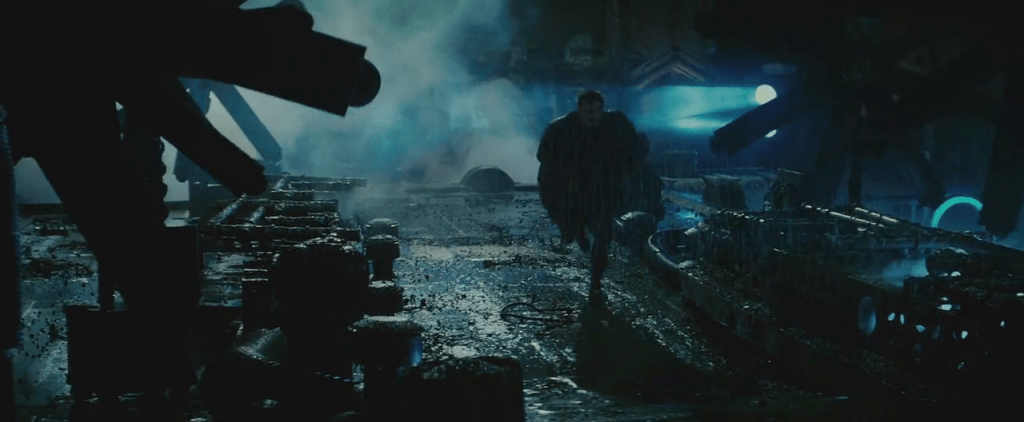
Deckard stumbles across the roof between pipes, spinning fan blades and spotlights. He is looking for an exit. It looks like this shot is on a fairly long lens to give more depth to all the spinning fans, layers of smoke, and wandering searchlights. We are at shoulder height, looking straight at Deckard.

We see Deckard’s POV of an exit hatch shot on a wider lens, but same waist high angle and straight view. An escape!

Deckard runs towards the camera and the hatch to get away from Roy. Because the lens on Deckard is long, the spinning blades blur as the focus pulls. The long lens also compresses space, giving the illusion that Deckard runs slower as he approaches the camera.

But then the exit hatch rips open. Someone is coming out of it.

Deckard slides to a stop coming towards the camera. Hunched over, and staring in disbelief, Deckard is slightly below the camera. The background has now completely blurred, and we see the horror on his face as he realizes his safe exit is now a death trap.

We cut to see Roy standing hunched forward, looking at Deckard. Roy hunches over, and the camera is below him, looking slightly up. Even hunched over, Roy is above us. We do not see Roy jump out of the roof hatch. In the time it took for Deckard to slide to a stop, Roy has already closed some distance from the hatch to Deckard. I think the temptation in a computer graphics production would show Roy’s superhuman powers here. But this quick film edit is amazing, leaving Roy’s speed to our imagination.

Deckard turns to run. We angle down on Deckard as we can see the top of his shoulders and the floor behind him. In the previous shots, Roy’s and Deckard’s eyes were close to the same location in the frame, but Roy is above us, and Deckard is below.

Deckard turns and runs towards the camera. We see both Roy and Deckard together in the frame. With the camera angles and how they positioned Roy, Deckard’s head comes up to the center of Roy’s chest.

Deckard runs back the way he came. The camera looks tilted down at him. When Deckard ran towards us before, it appeared he was running downhill. The horizon line is high in the frame. But now that he is running back, it looks like he has to run uphill.

Roy gracefully leaps onto the pipes Deckard was running in between. Roy is even higher than us now.

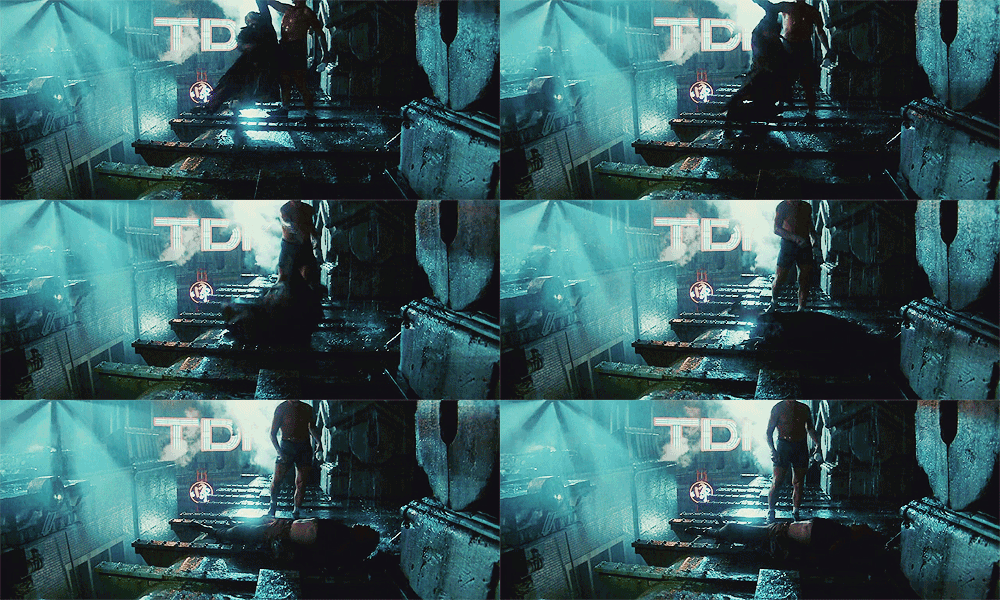
Deckard leaps off the roof, over the city street, toward the neighboring building. We are looking down at this stunt. Deckard’s shoulders barely reach the camera’s height, even at his highest point. Then he slams into the metal studs.

We cross over to see Deckard crash towards us onto the metal. When he climbed up onto the roof before we were level with his eyes. But now we look down on him as he slips off the building, trying desperately not to fall. But the camera does not drop to his level this time. Instead, we dolly in closer as the camera moves over the edge of the building, tilting down more and more on Deckard. He is below the floor level, and we look down at him like we stare at our shoes.

Same shot as we dolly in and tilt down

We cut to Roy, stepping towards the edge of the building to see what happened to Deckard. Roy is no longer running. He is carefully stepping forward to investigate. His game is over. Roy’s play-thing is now moments away from death, just like Roy himself. We are below the rooftop level, looking up at Roy. It’s like he’s on another floor above us.

We cut back to Deckard, struggling to hold on in the same shot we had before.

Now we cut even closer to Roy. We are on his left side, and Roy fills the frame. We are still looking up at him, but it is not as dramatic as before. The lens is long, bringing us close to Roy, who takes deep breaths as he watches Deckard lose his grip.

Roy steps away from the ledge, back where he came, leaving Deckard behind. Deckard struggles and looks away from his hands as if he doesn’t want to watch his death arrive.

Now we get a shot with Roy crossing his arms, a nail sticking through one hand, a dove in the other, his back to Deckard. Roy covers Deckard in the frame. The camera is now above Roy, angled down. Roy has been above us for most of this sequence. Even when he opened the hatch, it was only a couple frames before he loomed over Deckard.

What will Roy do? I am reminded of the first question in the Voight-Kampff test Holden asks, “You reach down, you flip the tortoise over on its back Leon…The tortoise lies on its back, its belly baking in the hot sun, beating its legs, trying to turn itself over, but it can’t, not without your help, but you’re not helping.”

Roy’s game put Deckard into this situation. Does Deckard deserve to fall for killing Zhora and Pris when Roy has already broken Deckard’s fingers for that? What will Roy do?

Roy unfolds his arms and turns around, revealing Deckard in the frame behind him. Roy then attempts the jump that Deckard failed. The camera tracks along with Roy as he leaps over the edge. The camera has not tracked along with a character at any other point in this sequence. We are with Roy as he makes the jump, making it feel like we, too, are leaping over the edge.

We then get a shot looking up at Roy as he clears the gap. The camera is so far below Roy that we see the soles of his shoes as he soars above us. We might be a couple of stories below him.

We see Roy soar over Deckard from behind and below. It’s an over-the-shoulder telephoto shot. The camera looks up at Deckard from below, while Deckard is far below Roy, who disappears into the smoke. Roy clears the gap with so much extra space he disappears into the rain and fog. Even at the brink of death, he is physically superior to Deckard.

Now, we see the highest-angle shot possible. The camera is directly above Deckard, looking down at the street. The camera tilts slightly, giving the image an unbalanced look.

We cut back to an over-the-shoulder below Deckard as Roy emerges from the smoke above us and kneels down. Both of them are high above us, but Roy is so high above the camera that even kneeling only brings him closer to us.

We get a new angle on Deckard as his grip fails. We look down on Deckard and the camera tilts so the metal beam is pointing up in the frame, above 45 degrees. Deckard slips farther down. This gives the illusion that the building tilts up and away from Deckard, almost trying to shake him off. Roy leans into the frame over Deckard in this exact shot, and you can see his shoulder on the left of the frame.

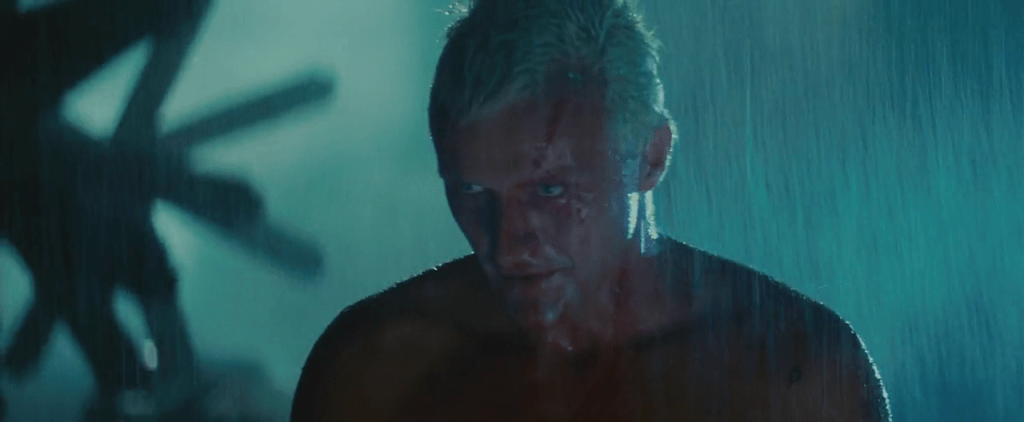
Then we cut to Roy’s eyes, almost glowing in the darkness as he looks down on us and Deckard. Roy is looking towards us, but if you look at the raindrops, you can see that Roy is standing high above the camera. The telephoto shot is so tight to Roy that his face fills the entire frame. Roy grimaces as he watches Deckard struggle as if going back and forth between entertainment, fascination, and horror.

Looking down at Deckard, we get a tighter shot of his face. His hands are no longer in the frame as he struggles to keep his grip. The long camera lens puts us close to both characters, with Roy high above and Deckard far below us.

The images cut back and forth between these shots as Roy tells Deckard, “Quite an experience to live in fear, isn’t it? That’s what it is to be a slave.” Roy is still above us but looking directly at us through the camera.

We see a shot looking down at Deckard’s fingers as he slips farther off the building. They angle the metal beam even higher in the frame. We were at his level when Deckard climbed onto the roof, but now he hangs far below us.

We cut back and forth to previous camera shots: a close-up looking down at Deckard’s hands as one hand slips, directly over Deckard as his grip fails, looking up at Roy, who smiles at Deckard. Deckard loses his grip completely and spits at Roy as he falls from the roof.

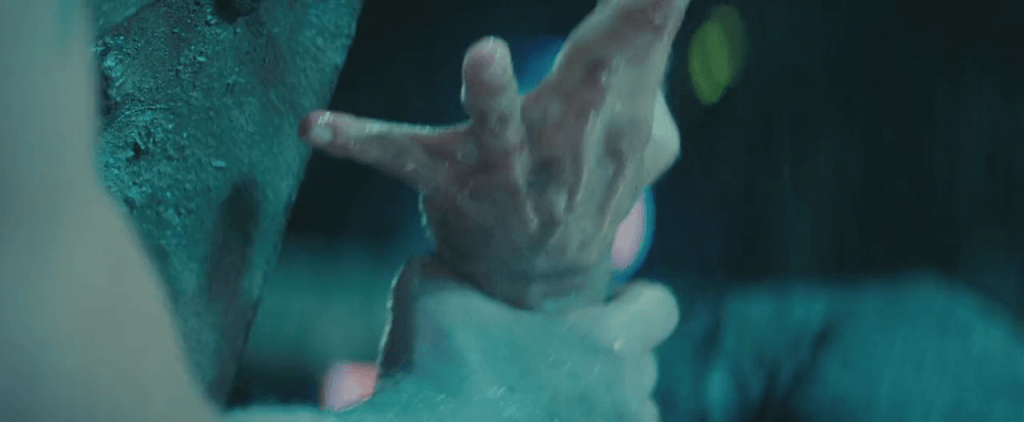
“Kinship!” shouts Roy as he catches Deckard’s wrist, saving Deckard from the fall. The camera looks down from Roy’s shoulder level. Roy dropped to catch Deckard. For his shoulder to be that low in the frame, Roy had to dive over the edge to catch Deckard. But we do not see Roy in that inferior position. Roy remains above us.

We get a low shot, looking up at Roy’s face as he struggles momentarily. This is the same hand that moments before had closed up as Roy’s body shut down.

We look down from above Deckard’s face as he grits his teeth like Roy is ripping his arm out of his socket. Roy is much stronger than Deckard, and even saving him hurts.

Roy purses his lips in determination as he lifts Deckard, the nail through Roy’s hand visible as he stands up, bringing Deckard onto the roof. Deckard holds onto his elbow, bracing himself, as Roy hoists him.

We get a shot from far below Roy and Deckard. Roy’s arm fully extends as he lifts Deckard up, showing just how strong Roy is. Deckard kicks his legs wide, trying to find some foothold to stand on.

Roy flops Deckard down, his belly exposed to the rain. Deckard once again lays out completely, but now Roy stands directly above him. The extreme camera tilting is over. We will look a little up and down. But the character’s position in the frame tells the story here. Deckard lies at Roy’s feet. And Roy is standing so high in the frame that the edge of the frame cuts his head off. Deckard crawls away from Roy, coming towards the camera.

We get a reverse shot of Deckard crawling away from us. We are on Roy’s side now. The camera is at mid-thigh height, looking down on Deckard. Roy looms high above us, and most of his body clips out of frame. Deckard is completely visible in the frame, as if its edges trap him, but Roy is so big in frame he does not fit. We only see Roy’s knees, running shorts, and his hand with a nail through it as he steps towards Deckard, who crawls back into a pillar. Deckard has no way out now and squirms below Roy. And then Roy slowly sits down.

We get a reverse shot of Roy slowly sitting down. Moments before, Roy filled the entire frame; now, he sits just above eye level with the camera and gives the “tears in rain” monologue.

“I’ve seen things you people wouldn’t believe… Attack ships on fire off the shoulder of Orion… I watched C-beams glitter in the dark near the Tannhäuser Gate. All those moments will be lost in time, like tears in rain… Time to die.”

Roy remains above us, and Deckard stays below. But this might be as close as Roy can get to Deckard’s level because he might be more human than human.

I don’t know if it is possible to angle the camera higher up or lower down than this sequence shows. Deckard falls so far below us that we look straight down at the street below him. Roy jumps so high above us that we see the soles of his shoes.

There is tremendous power in the angle of a camera. If it took physical effort to climb to all the places the camera positions itself in this scene, we would have to climb up and down multiple stories in less than a minute. Emotionally, I think that happens here as well.

With all the fantastic special effects available, it is incredible how powerful the camera can be when pointing up and down.

As Roy dies, he releases the dove in his hand, and it flies up and away from us. We then get a shot of the clouds in the sky above 2019 Los Angeles.

How does a MONSTER enter a scene?

“Death awaits you all- with nasty, big, pointy teeth! ~ Tim the Enchanter Monty Python and the Holy Grail

We want our monsters to be scary. But what makes a monster scary? Is it their size? How loud they can roar? Their number of teeth? How good of a jump scare they give us?

I think the answer lies in how a monster enters a scene. For this, let’s look at 1979’s Alien.

How does the Alien make its appearances in the movie?

  • An Alien egg opens onto Kane, and the face-hugger jumps out of the egg onto his face
  • They cut away Kane’s helmet revealing the face hugger wrapped around his face.
  • The face-hugger disappears from Kane’s face in the lab, and the crew looks for it. The dead face-hugger drops from the ceiling onto Ripley’s shoulder.
  • The Chestburster explodes through Kane’s sternum during dinner
  • The Alien drops from the top of the frame behind Brett
  • Dallas turns his flashlight onto the alien in the air ducts, and it grabs him
  • The Alien’s shadow sneaks behind Lambert, highlighted in a shadow. She turns around, and it stands up into the frame. Parker tries to fend the creature off, but it kills him, and then its tail slowly creeps between Lambert’s legs
  • The Alien turns the corner in the Nostromo, blocking Ripley from her escape pod
  • The Alien reaches out from the wall in the escape pod.
  • Ripley climbs into a space suit and turns on all the toxic gasses she can kill it. The creature writhes on the floor. But when she turns her head, it is no longer below her on the floor; it is right behind her rearing to strike.

So how does the Alien enter the scene? It doesn’t have to because the Alien is already there. We just can’t see it. Yet. We are going into its territory.

And the characters certainly do not know it is there. More often than not, the characters are entering the monster’s lair. A loud roar from a distance might be scary, but a whisper from right behind you chills to the bone.

Seeing something emerge from just below the surface or from the side of the frame is as surprising as it gets. Jump scares can emulate this temporarily, but without that ongoing physical proximity, the monster’s presence dissipates. Our physical sensation of being right next to something so dangerous adds a tense anxiety to our fear and horror.

More important than how scary a monster looks might be the question, “how did it get so close with no one noticing?”